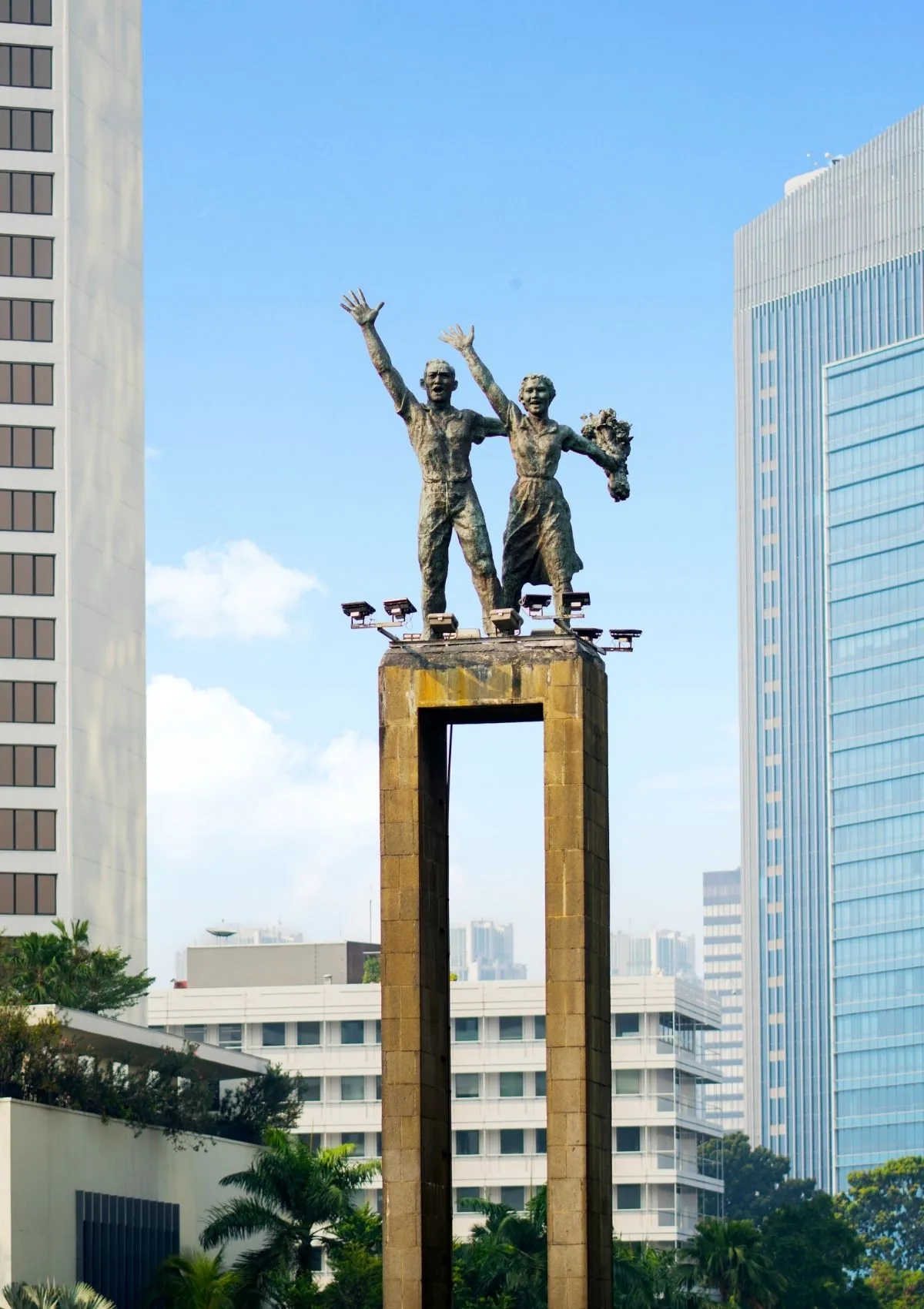

The Selamat Datang Monument in central Jakarta, a bronze couple waving above the surrounding office towers
Indonesia flag

Indonesia Business Culture, Work Culture & Etiquette

Business practice guide · informed by benchmark data and by decades of practitioner work at Global Business Culture

The elevator pitch

Where seniority is named out loud from the first introduction, Bapak and Ibu with the first name, a flat "no" is almost never said, and the decision is made after the meeting rather than in it.

Where in the world
WIB--:--
WITA--:--
WIT--:--
You--:--
—
Population
~288 million
Main hubs
Jakarta
Surabaya · Bandung · Medan
Language
Bahasa Indonesia
700+ local languages · English in multinationals
Currency
IDR · Rp
Timezone
WIB · WITA · WIT
UTC+7 Java · UTC+8 Bali · UTC+9 Papua · no DST

Watch outFree

The five mistakes we see most often with Indonesian colleagues.

Even seasoned operators trip over these.

1
Hearing “ya” as a decision. A warm yes often means “I have heard you”. Belum (not yet) and mungkin (maybe) do the work a flat no would. Close the loop in writing.
2
Expecting the decision in the meeting. Organizations consult senior people privately before anything is agreed, so warm language is the start of a process. Pushing for a yes before you fly home costs you.
3
Getting the seniority match wrong. Sending a junior to meet a senior counterpart reads as disrespect, and middle managers rarely hold final sign-off. Greet the most senior person first, and find out early who signs.
4
Raising a problem in front of the group. Malu, roughly shame, makes public correction costly, and it damages the manager who allowed it. Say it one to one, or through their manager.
5
Treating the religious and regional context as background. Halal by default, take your cue on alcohol from the host, use the right hand, and do not assume Jakarta's norms travel to Medan or Bali.

Try one nowFree

Practice working with Indonesia.

Ten situations you will actually meet, each with three plausible answers. Start with this one.

Scenario 1 of 10 · Relationship & Trust

Three years of good work with a Jakarta client, all of it through one director who championed you internally. He moves to a competitor. His successor is courteous, has your contract in front of her, and behaves as though you are a new supplier being assessed.

What is the realistic position?

Module and guide

Learn Indonesian business culture.

The same nine topics, twice over: taught in the module, carried in the guide. Both are included in a subscription.

🔒 Subscription
🎓

eLearning module

About 30 minutes · nine topics · video and worked examples

A guided walk through how business is actually done in Indonesia, with questions along the way so it lands. Nothing is scored and no result is reported: the questions are there to make it stick, not to test you.

Stop whenever you like. Your progress is saved, it resumes where you left off, and it stays on your dashboard until you finish it.

What it covers

  • Economy
  • Society
  • Key country values
  • Management style
  • Team
  • Communication style
  • Meetings
  • Business etiquette
  • Five key recommendations
Unlock with subscription →
🔒 Subscription
📄

Quick guide, four pages

A4 · built to print · no wifi needed

The same ground in a form you can carry. The facts you need before you land, the four values that explain most of the behavior, then the practical detail on how work gets done.

Print it and take it into the room, or read it on the plane the day before a trip to Indonesia.

On the four pages

  • Country facts
  • Economy and society
  • Four core values
  • Management style
  • Team
  • Communication
  • Meetings
  • Etiquette
  • Top five recommendations
Unlock with subscription →

Your first 30 daysFree

Checklist for working with Indonesian colleagues, tick as you go.

Small moves that show you've done the work.

When activity slowsFree

Indonesian business calendar, key dates to know.

When Indonesian business slows and decision-makers are away.

Ramadan to Idul Fitri
Lebaran
Hours shorten through Ramadan, then mudik empties the cities. With collective leave the break commonly runs nine days.
Announced the autumn before
Cuti bersama is set late
The collective-leave days that turn public holidays into week-long breaks are fixed by decree, usually in the autumn before.
March
Nyepi, Bali's Day of Silence
Bali stops completely for 24 hours and its international airport closes, thought to be the only one anywhere to do so.
Late Jan or Feb
Imlek, Chinese New Year
A national public holiday. Chinese-Indonesian firms, heavily represented in trade and distribution, may be quiet longer than the single gazetted day.
17 August
Independence Day
Hari Kemerdekaan, the biggest civic date of the year. Offices close, neighbourhoods hold flag ceremonies, and the surrounding days are thin.
Late December
Christmas and new year
A national public holiday in a country with substantial Protestant and Catholic populations, often bridged into January.

Against your country, or your own experienceFree

How Indonesia compares.

Where Indonesia sits on the five dimensions. Add your own country or your assessment scores, and click any row for detail.

Relationship & Trust Click to expand
Trust built through relationshipTrust built through delivery
Indonesia

What this means in practice

Trust is built person to person before it is built company to company. Counterparts want several unhurried meetings and meals before serious commercial discussion, and loyalty attaches to the manager more than to the organization.

What to watch for

  • Deals rarely close on a first visit. Budget for repeat trips rather than treating one as the negotiation.
  • If your main contact leaves, expect to rebuild. The relationship was with them, not with the logo.
  • Meals are working time, not a courtesy around the work.
Communication & Feedback Click to expand
Meaning carried in the situationMeaning stated in words
Indonesia

What this means in practice

Meaning sits in tone, pace and what is left unsaid. A direct tidak is uncommon because it costs both parties face, so a no arrives as belum, mungkin, or “this may be a little difficult”.

What to watch for

  • A cheerful yes, repeated, with nodding, is frequently acknowledgment rather than agreement.
  • Confirm in writing after every meeting. It reads as diligence and lets the other side adjust without losing face.
  • Pointing with the index finger, or passing with the left hand alone, lands badly and nobody will mention it.
Decisions & Agreement Click to expand
Guided by role, agreed in advanceGuided by contribution, agreed in the meeting
Indonesia

What this means in practice

Decisions rest with the most senior person, and are taken outside the room. Junior staff rarely contradict a manager in a group even when they hold a concern, and an idea is often floated privately before it reaches the meeting.

What to watch for

  • Silence is the thing to notice, not the thing to be reassured by. Ask privately afterwards.
  • Middle managers frequently lack final sign-off. Identify the decision maker early rather than escalating late.
  • Treat several rounds of follow-up as the normal path, not as drift.
Accountability & Ownership Click to expand
Belongs to the team and its leaderBelongs to the named person
Indonesia

What this means in practice

Effort and credit are shared across the team, while responsibility is carried by the manager. Gotong royong means colleagues quietly pick up a teammate's work; Bapakisme means the manager answers for the result.

What to watch for

  • Name owners and dates in writing. Left implicit, a task belongs to the group and can drift.
  • Praising one person in front of the group can land as awkwardly as criticising one.
  • Escalate through the manager, not around them. Going over a head reads as a personal judgment.
Planning & Adaptability Click to expand
Prepare fully, then startStart early, refine as you learn
Indonesia

What this means in practice

Indonesian teams meet to agree the approach together, then people begin; a written plan waiting for sign-off is not usually the starting point. Open questions are treated as normal and answered while the work runs, and an unexpected problem is handled with practical decisions as it develops.

What to watch for

  • Agree the approach in a meeting and start; waiting for every answer first reads as time the work could use.
  • Expect an unclear brief to be checked with the manager, and confirm your own reading the same way.
  • Where your usual process does not fit, ask whether an exception is allowed, especially in banking and regulated work.

Quick answersFree

Common questions about working with Indonesia.

How should I approach first business meetings in Indonesia?

Greet the most senior person first with a soft handshake, often followed by a hand over the heart. Use Bapak or Ibu with the first name. Exchange cards with both hands. Expect ten minutes of conversation before the agenda.

What is the business communication style in Indonesia?

Much is left unsaid to keep things harmonious. A blunt no is rare because it costs both sides face, so belum (not yet) or "this may be a little difficult" carry it. A cheerful yes often means I hear you. Confirm in writing.

How important is punctuality in business meetings in Indonesia?

Be punctual yourself, and expect flexibility. Jam karet, rubber time, still shapes meetings with government and external partners, though Jakarta's corporate world increasingly expects punctuality. Traffic is severe enough to book fewer meetings a day.

How are business decisions made in Indonesia?

By the most senior person, after private consultation, and almost never in the meeting itself. Junior colleagues rarely challenge a manager in front of others, so silence is not agreement. Middle managers often lack sign-off.

How is feedback given in workplaces in Indonesia?

Privately and gently. Malu, roughly shame, makes public correction damaging to the manager who allowed it as much as to the person corrected. A supervisor may ask how the work is going rather than naming the problem.

What are the business gift-giving and hospitality norms in Indonesia?

Meals are central to building trust and often precede negotiation. Wait for the host to begin; as guest of honor take a modest amount of several dishes. Halal is the default and alcohol is not always served.