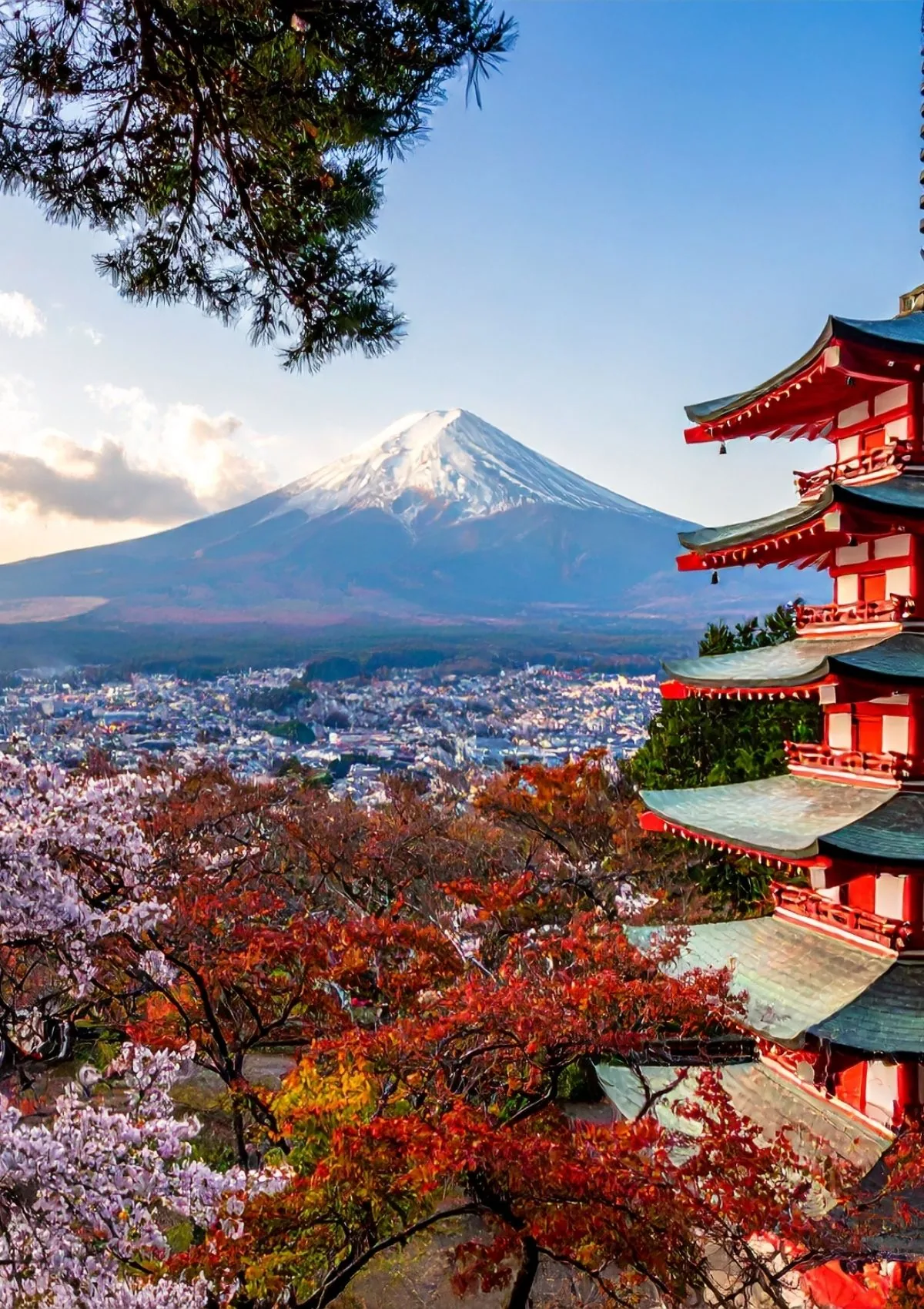

Mount Fuji behind a red pagoda, framed by flowering trees
Japan flag

Japan Business Culture, Work Culture & Etiquette

Business practice guide · informed by benchmark data and by decades of practitioner work at Global Business Culture

The elevator pitch

Group-first, thoroughly planned, and a great deal understood without being said. Japanese business trust is earned through consistent reliability, respect for the group, and quality attention. What isn't said carries as much weight as what is.

Where in the world
Japan--:--
You--:--
—
Population
~123 million
Main hubs
Tokyo
Osaka · Nagoya · Fukuoka
Language
Japanese
English limited in most business contexts
Currency
JPY · ¥
Timezone
GMT+9 (JST)

Watch outFree

The five mistakes we see most often with Japanese colleagues.

Even seasoned operators trip over these.

1
Reading silence as agreement. Silence in Japanese meetings rarely means 'yes'. It often means 'I need to think', 'I disagree but won't say so publicly', or 'this needs consultation'. Give people time; follow up in 1:1s to surface real positions.
2
Pushing for a decision in the room. Decisions are made in the corridors and 1:1s before the meeting. Insisting on a decision in the room disrupts nemawashi and forces people into positions they haven't cleared with their team. Ask what preparation would help.
3
Naming an individual for a failure. Success and failure belong to the group. Publicly attributing an error to one person causes acute face-loss and damages team cohesion. Frame issues as process failures, not individual ones, even if you know who's responsible.
4
Treating small courtesies as optional. Business card exchange, seating order, order of speaking, gift wrapping: these are not decorative. They signal respect and awareness. Skipping them reads as dismissive, even when you're being warm otherwise.
5
Assuming English fluency = Western business norms. Younger and more internationally experienced Japanese colleagues often speak excellent English, but the underlying business culture (who speaks first, how feedback is given, nemawashi) remains Japanese. Don't confuse language for culture.

Try one nowFree

Practice working with Japan.

Ten situations you will actually meet, each with three plausible answers. Start with this one.

Scenario 1 of 10 · Relationship & Trust

The project is going well and the substantive work is on track. You have joined two calls about four minutes late, and you moved a minor review at a day's notice because something bigger came up. Over the last two weeks your Japanese counterpart has become noticeably more formal with you.

What is going on?

Module and guide

Learn Japanese business culture.

The same nine topics, twice over: taught in the module, carried in the guide. Both are included in a subscription.

🔒 Subscription
🎓

eLearning module

About 30 minutes · nine topics · video and worked examples

A guided walk through how business is actually done in Japan, with questions along the way so it lands. Nothing is scored and no result is reported: the questions are there to make it stick, not to test you.

Stop whenever you like. Your progress is saved, it resumes where you left off, and it stays on your dashboard until you finish it.

What it covers

  • Economy
  • Society
  • Key country values
  • Management style
  • Team
  • Communication style
  • Meetings
  • Business etiquette
  • Five key recommendations
Unlock with subscription →
🔒 Subscription
📄

Quick guide, four pages

A4 · built to print · no wifi needed

The same ground in a form you can carry. The facts you need before you land, the four values that explain most of the behavior, then the practical detail on how work gets done.

Print it and take it into the room, or read it on the plane the day before a trip to Japan.

On the four pages

  • Country facts
  • Economy and society
  • Four core values
  • Management style
  • Team
  • Communication
  • Meetings
  • Etiquette
  • Top five recommendations
Unlock with subscription →

Your first 30 daysFree

Checklist for working with Japanese colleagues, tick as you go.

Small moves that show you've done the work.

When activity slowsFree

Japanese business calendar, key dates to know.

When Japanese business slows and decision-makers are away.

Dec 28 – Jan 4
Dec 28 – Jan 4
New Year (Oshōgatsu), the most important holiday. Offices close; family time is sacred. No business activity.
Late April – early May
Golden Week: string of holidays across April 29 to May 5. Many take the whole week. Meetings scarce.
Mid August
Mid August
Obon, a Buddhist observance around Aug 13–16. Many workers return to home towns; senior stakeholders often away.
March 31 / April 1
March 31 / April 1
Fiscal year-end / new year: Japan runs an April–March fiscal year. New hires start April 1 (with formal ceremonies); Q4 (Jan–Mar) is intense with year-end pressure.
Bonus periods
Bonus periods
Summer (June) and winter (December) bonuses: significant portion of annual compensation. Not the moment to renegotiate contracts.
Cherry blossom (early April)
Hanami season: informal work drinks under cherry blossoms are a bonding tradition. Accept invitations.

Against your country, or your own experienceFree

How Japan compares.

Where Japan sits on the five dimensions. Add your own country or your assessment scores, and click any row for detail.

Relationship & Trust Click to expand
Trust built through relationshipTrust built through delivery
Japan

What this means in practice

Japanese business trust is built slowly, through demonstrated reliability and consistent attention to detail. Personal relationship matters, but professional dependability matters more.

What to watch for

  • Punctuality is not just polite. It's a signal of respect and reliability.
  • Follow-up on small commitments is watched carefully; small misses erode trust quickly.
  • Business cards are exchanged with two hands; treat them with visible care.
Communication & Feedback Click to expand
Meaning carried in the situationMeaning stated in words
Japan

What this means in practice

Japanese business communication is indirect, with much of the meaning carried in the situation. What is unsaid, hesitations, and non-verbal cues carry significant meaning.

What to watch for

  • "I'll consider it" often means "no". Don't push for immediate commitment.
  • Silence is used deliberately for reflection; don't rush to fill it.
  • Direct disagreement in a meeting is very rare; concerns are raised one-on-one afterwards.
Decisions & Agreement Click to expand
Guided by role, agreed in advanceGuided by contribution, agreed in the meeting
Japan

What this means in practice

Decisions are aligned in advance through nemawashi (informal groundwork). By the meeting, the outcome is often already agreed, the meeting formalizes it.

What to watch for

  • Proposing new ideas in a meeting for the first time can be disruptive; brief people first.
  • Rushing a decision without pre-alignment will slow you down, not speed you up.
  • Meetings can feel silent to outsiders, the real discussion happened before.
Accountability & Ownership Click to expand
Belongs to the team and its leaderBelongs to the named person
Japan

What this means in practice

Accountability is shared and collective in Japanese business. Individual credit is downplayed; the team, department, or company takes precedence.

What to watch for

  • Naming individuals publicly for praise or blame can cause discomfort.
  • Consensus-based ringi decisions distribute responsibility across many people.
  • Own your part visibly but attribute success to the group.
Planning & Adaptability Click to expand
Prepare fully, then startStart early, refine as you learn
Japan

What this means in practice

Japanese business favors thorough preparation and precise execution. Plans are detailed, timelines are meticulously followed, and quality is non-negotiable.

What to watch for

  • Last-minute scope changes are received poorly. Signal early and often.
  • "Good enough" is not a standard; quality is expected to be complete.
  • Deadlines are firm commitments, not aspirations.

Quick answersFree

Common questions about working with Japan.

What is Japanese work culture like?

Work is organized around the team. Roles are broad, colleagues help each other finish, and credit is usually shared. Work is planned and checked carefully before it goes out, so the start can feel slow and the finish fast. Since April 2019 the Work Style Reform law has capped overtime at 45 hours a month and 360 a year in principle, and many employers now offer flexible working.

What should I know before doing business in Japan?

Expect a longer start and a faster finish. Early meetings build the relationship; the decision is prepared afterward through nemawashi, informal consultation with everyone it affects. Send materials in advance, expect detailed questions on quality and risk, and look for an introduction through a mutual contact rather than a cold approach.

How is Japanese business culture different from American business culture?

On Culture Hub's five dimensions, Japan and the US sit on opposite sides of the midpoint on all five. Neither end is better; friction starts when each side reads the other's normal way of working as a problem. Compare Japan and the US side by side.

What business etiquette matters most in Japan?

Exchange business cards (meishi) with both hands, read the card, and keep it on the table during the meeting; never write on it. Greet with a light bow, or a handshake with a slight bow, and address people by surname plus '-san'. Wait to be shown your seat, arrive early, and follow up in writing after meetings.

What is the business communication style in Japan?

Much of the meaning is carried in the situation rather than stated in words. Silence is meaningful: it may signal disagreement, careful thought, or discomfort. A direct 'no' is rare; listen for 'that would be difficult' or a change of subject.

How important is punctuality in business meetings in Japan?

Punctuality matters a great deal. Arrive about 5 minutes early. Meetings run to schedule, and last-minute changes are disruptive and reflect poorly on the organizer.

How are business decisions made in Japan?

Made through nemawashi: extensive informal consultation before formal meetings. By the time a proposal reaches a meeting, alignment has already been built. Live debate in meetings is uncommon; the meeting confirms.

How is feedback given in workplaces in Japan?

Delivered privately, indirectly, and often through a third party. Public criticism causes loss of face (mentsu) and damages trust deeply. Wrap concerns in context; never single someone out in front of colleagues.

What are the business gift-giving and hospitality norms in Japan?

Gift-giving is meaningful and expected in ongoing relationships. Bring something regionally distinctive from your home country, nicely wrapped. Present with both hands. Business dinners often extend to after-work drinks (nomikai): attend if invited.