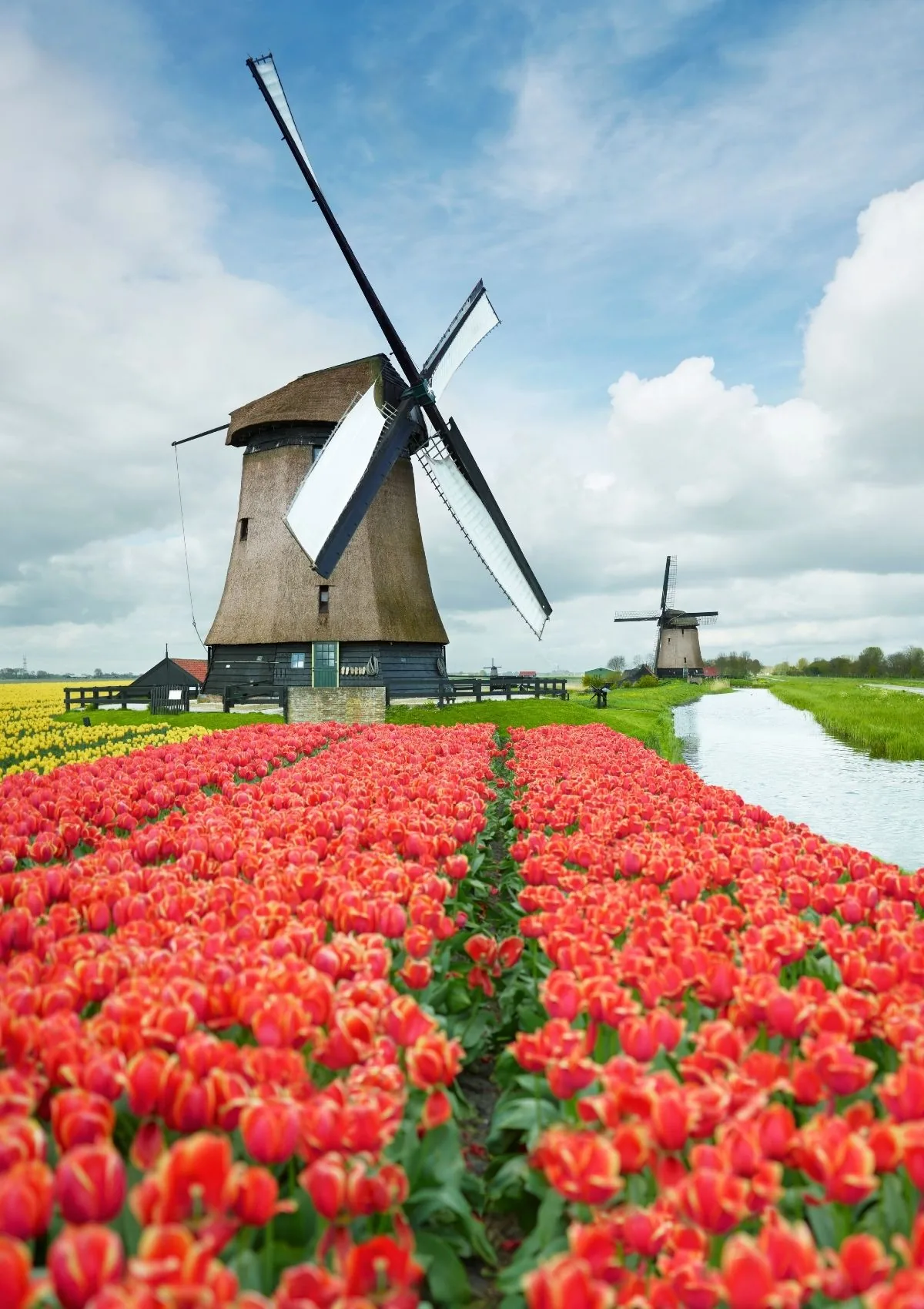
A Dutch windmill behind a field of red tulips, a second windmill in the distance
Netherlands flag

Netherlands Business Culture, Work Culture & Etiquette

Business practice guide · informed by benchmark data and by decades of practitioner work at Global Business Culture

The elevator pitch

Where people say what they think, titles carry little weight, and consensus is built through open debate, not corridor diplomacy. Pragmatic, egalitarian, and impatient with anything that wastes time, including ceremony and excess.

Where in the world
Netherlands--:--
You--:--
—
Population
~17.8 million
Main hubs
Amsterdam
Rotterdam · The Hague · Utrecht · Eindhoven
Language
Dutch
English fluent
Currency
EUR · €
Timezone
CET
CEST (CET+1) in summer

Watch outFree

The five mistakes we see most often with Dutch colleagues.

Even seasoned operators trip over these.

1
Softening feedback to the point of invisibility. Dutch colleagues take feedback at face value. Wrapping a critique in three layers of praise means they hear the praise. Be direct, "this section needs work because X", even if it feels uncomfortable at first.
2
Reading directness as rudeness. A Dutch colleague saying "I disagree, and here's why" is being engaged, not aggressive. The frankness is a professional courtesy. It saves everyone time. Match it and the relationship gets easier.
3
Trying to pull rank to close down debate. "Because I'm the manager" is not an acceptable argument in a Dutch workplace. Juniors will still push back if the reasoning is weak, and they're expected to. Win the argument on the merits, not the title.
4
Scheduling business calls in the evening. Work-life boundaries are strongly respected. A call at 7pm is unusual and often unwelcome: evenings are for family. Keep meetings within business hours (9-6) and respect Wednesday afternoons if colleagues have children (traditional half-day for kids).
5
Being ostentatious with expenses, gifts, or displays of wealth. Modesty is a cultural value; visible wealth or extravagant hospitality can feel uncomfortable. Business meals are practical, not extravagant. "Doe maar gewoon, dan doe je al gek genoeg": just act normal, that's crazy enough.

Try one nowFree

Practice working with the Netherlands.

Ten situations you will actually meet, each with three plausible answers. Start with this one.

Scenario 1 of 10 · Relationship & Trust

First call with a new Dutch client. You open the way you always do: how was the weekend, where are you dialing in from, a comment about the weather, a question about their summer plans. Two minutes in, your counterpart says pleasantly: "Shall we start?"

How should you read that?

Module and guide

Learn Dutch business culture.

The same nine topics, twice over: taught in the module, carried in the guide. Both are included in a subscription.

🔒 Subscription
🎓

eLearning module

About 30 minutes · nine topics · video and worked examples

A guided walk through how business is actually done in the Netherlands, with questions along the way so it lands. Nothing is scored and no result is reported: the questions are there to make it stick, not to test you.

Stop whenever you like. Your progress is saved, it resumes where you left off, and it stays on your dashboard until you finish it.

What it covers

  • Economy
  • Society
  • Key country values
  • Management style
  • Team
  • Communication style
  • Meetings
  • Business etiquette
  • Five key recommendations
Unlock with subscription →
🔒 Subscription
📄

Quick guide, four pages

A4 · built to print · no wifi needed

The same ground in a form you can carry. The facts you need before you land, the four values that explain most of the behavior, then the practical detail on how work gets done.

Print it and take it into the room, or read it on the plane the day before a trip to the Netherlands.

On the four pages

  • Country facts
  • Economy and society
  • Four core values
  • Management style
  • Team
  • Communication
  • Meetings
  • Etiquette
  • Top five recommendations
Unlock with subscription →

Your first 30 daysFree

Checklist for working with Dutch colleagues, tick as you go.

Small moves that show you've done the work.

When activity slowsFree

Dutch business calendar, key dates to know.

When Dutch business slows and decision-makers are away.

Late December to early January
Kerst (Christmas period)
Most businesses slow from Dec 20. Many take extended leave through 2 Jan. Avoid launching new initiatives.
Good Friday to Easter Monday
Pasen (Easter)
Public holidays; surrounding week often used for family holidays.
27 April
Koningsdag (King's Day)
National celebration: genuinely a day off, cities turn orange. Often bridged with the surrounding weekend.
5 May
Bevrijdingsdag (Liberation Day)
National holiday every 5 years (2025, 2030 etc.), a working day otherwise. Government offices close annually.
July to mid-August
Summer holidays
Senior people often away for 2-3 weeks, staggered by region (school holidays differ North/Central/South). Confirm attendance for critical meetings.
May to June (moveable)
Hemelvaart / Pinksteren (Ascension / Whit)
Two long weekends in quick succession. Many take the intervening Friday off ("brugdag"). Business rhythm gets choppy through this window.

Against your country, or your own experienceFree

How the Netherlands compares.

Where the Netherlands sits on the five dimensions. Add your own country or your assessment scores, and click any row for detail.

Relationship & Trust Click to expand
Trust built through relationshipTrust built through delivery
Netherlands

What this means in practice

Dutch business trust is earned through competence, delivery, and straight talk. Personal relationships develop over time but rarely lead the trust equation: reliability and results do.

What to watch for

  • Extended relationship-building before getting to business can feel wasteful. Start with the substance.
  • Cold, direct outreach is normal and professionally acceptable, no need for elaborate warmth.
  • Work and personal life are strictly separated; office socializing is contained, evenings are for family.
Communication & Feedback Click to expand
Meaning carried in the situationMeaning stated in words
Netherlands

What this means in practice

Dutch business communication is famously direct, often the most direct in Europe. Say what you mean, name the issue, propose the fix. Anything softened or hinted at will be probed for the actual position.

What to watch for

  • What sounds blunt to Anglo, Asian, or Southern European ears is neutral professional dialogue. Don't read hostility.
  • Seniority does not soften directness: juniors challenge seniors openly, and it's expected.
  • Silence in a meeting is not consent: Dutch colleagues will speak up if they disagree.
Decisions & Agreement Click to expand
Guided by role, agreed in advanceGuided by contribution, agreed in the meeting
Netherlands

What this means in practice

Dutch decisions follow the polder model, and the meeting is where it happens. Everyone with a stake contributes, consensus is built through open discussion in the room, and the process is efficient rather than protracted.

What to watch for

  • Skipping the discussion to "just decide" damages buy-in. People expect to be consulted.
  • Saying nothing is usually taken as agreement, so if you disagree, say so in the room rather than afterwards.
  • Once decided, execution is fast and firm, and reopening later without new information is poorly received.
Accountability & Ownership Click to expand
Belongs to the team and its leaderBelongs to the named person
Netherlands

What this means in practice

Accountability is individual and clearly named. Roles are defined, ownership is documented, and stepping into someone else's area without invitation is unwelcome.

What to watch for

  • Reaching outside your area to "help" can be read as questioning someone's competence.
  • Titles matter less than in Germany or France, but ownership boundaries still do. Respect them.
  • Written confirmation of ownership is normal: emails documenting who owes what are standard.
Planning & Adaptability Click to expand
Prepare fully, then startStart early, refine as you learn
Netherlands

What this means in practice

Dutch teams prepare enough to be clear, agree the approach in a meeting and start, naming what is still unknown so nobody is surprised later. When something unexpected appears, the plan is adjusted and the deadline is protected, and people adapt the process where it does not fit.

What to watch for

  • Keep documents lean; the approach is settled in a meeting rather than in a paper that waits for sign-off.
  • Name what is still open at the start, since the team expects unknowns to be stated rather than covered.
  • Expect the plan to move rather than the date when a problem appears part way through the work.

Quick answersFree

Common questions about working with the Netherlands.

How should I approach first business meetings in the Netherlands?

Firm handshake, direct eye contact, first names quickly. Titles matter little in most contexts: even senior executives are addressed by first name. Small talk is brief and practical; get to business quickly.

What is the business communication style in the Netherlands?

Extremely direct. Say what you mean: hedging reads as evasion. Feedback is unvarnished, disagreement is stated openly, and challenging seniors is not just tolerated but expected. Politeness is efficiency, not ceremony.

How important is punctuality in business meetings in the Netherlands?

Punctuality matters. Arriving on time or 2-3 minutes early is normal; being late without notice signals disrespect. Meetings start and end on time, and running over is poor form. Respect for others' schedules.

How are business decisions made in the Netherlands?

Decisions follow the polder model: everyone with a stake gets heard, then a clear decision is made and executed. Consultation is expected; skipping it damages buy-in. Once decided, execution is fast.

How is feedback given in workplaces in the Netherlands?

Feedback is direct, specific, and often unsoftened. Praise is measured and reserved for genuinely strong work. Criticism is delivered plainly. Take it as information, not personal attack.

What are the business gift-giving and hospitality norms in the Netherlands?

Corporate gifts are minimal: ostentation is culturally frowned upon. Business lunches are contained and practical. Don't expect extended socializing in the evening. Work-life separation is respected and family time is protected.