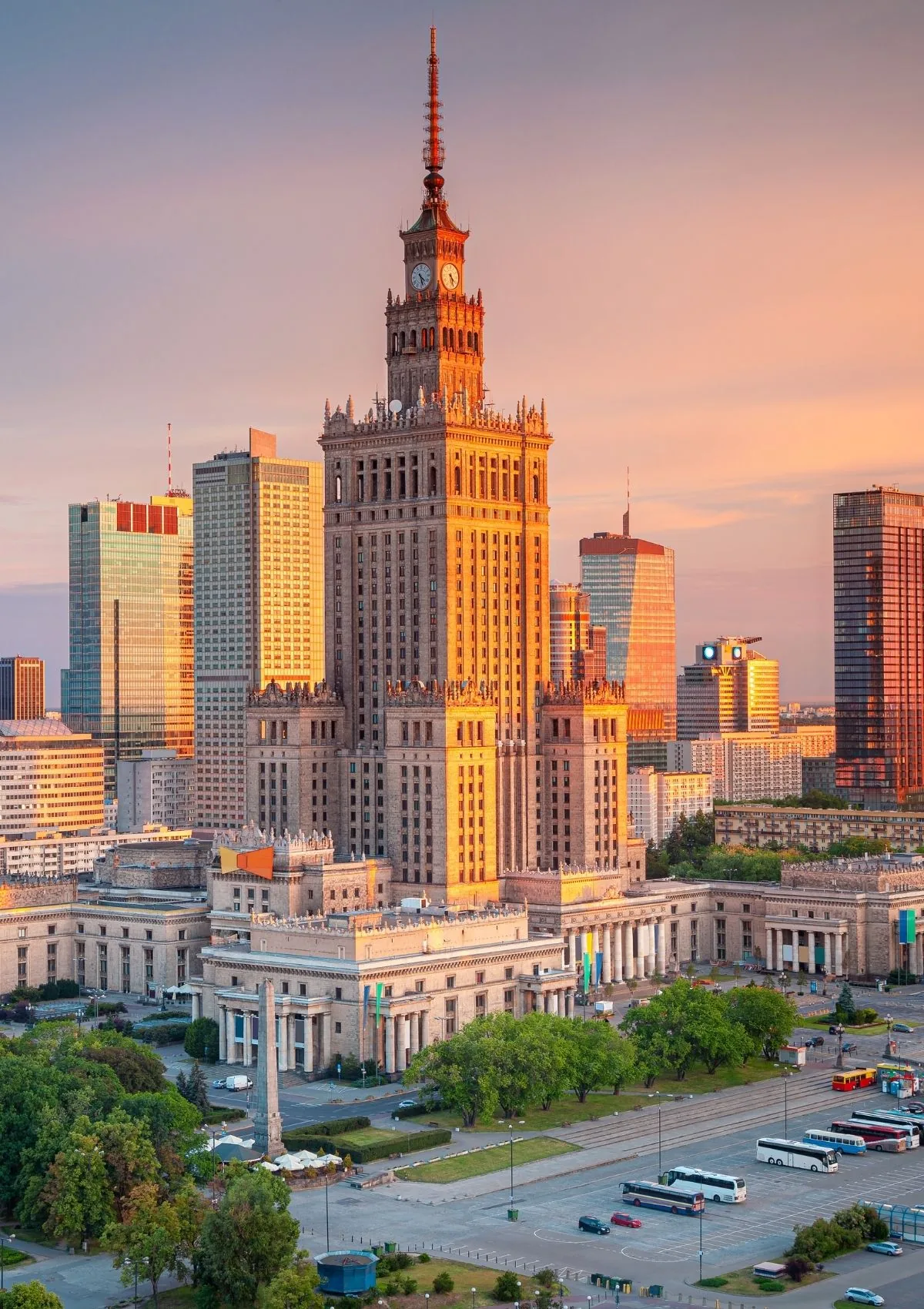
The Palace of Culture and Science above the Warsaw skyline at sunset
Poland flag

Poland Business Culture, Work Culture & Etiquette

Business practice guide · informed by benchmark data and by decades of practitioner work at Global Business Culture

The elevator pitch

Where business runs on direct-but-formal communication, titles carry real professional weight, and personal warmth grows steadily through shared meals and shared time. Central European in structure, Catholic in calendar, and Warsaw's tech scene runs at global pace.

Where in the world
Poland--:--
You--:--
—
Population
~37 million
Main hubs
Warsaw
Kraków · Wrocław · Gdańsk · Poznań
Language
Polish
Currency
PLN · zł
Timezone
CET
CEST (CET+1) in summer

Watch outFree

The five mistakes we see most often with Polish colleagues.

Even seasoned operators trip over these.

1
Skipping titles or dropping to first names too soon. Polish professional titles (Pan/Pani, Dr., Prof., Mgr) carry real weight and are used more than in Anglo cultures. Skipping them or jumping to first names before invited signals cultural laziness.
2
Being over-enthusiastic or salesy. American-style hype or aggressive selling feels unrefined. Polish business rewards measured, evidence-based conversation. Let substance carry the pitch.
3
Treating Poland as identical to Germany or Russia. Poland has a distinct identity: proudly not-Russian, culturally influenced by both Germany and Central Europe but its own. Assumptions that Berlin or Moscow playbooks apply cause friction.
4
Ignoring the Catholic calendar. Polish public life is shaped by Catholic observances: Christmas, Easter, All Saints, Corpus Christi, Assumption all create real slowdowns. Check the calendar before scheduling anything critical.
5
Underestimating the bureaucracy. Anything involving permits, contracts, or public bodies takes longer than expected. Build in real time buffers and don't confuse process with obstruction.

Try one nowFree

Practice working with Poland.

Ten situations you will actually meet, each with three plausible answers. Start with this one.

Scenario 1 of 10 · Relationship & Trust

Your regional strategy has a slide covering the eastern territories: Poland grouped with Russia and a note that the Moscow office will coordinate. You present it in Warsaw. The room is courteous, the questions are few, and the engagement afterwards is thin.

What did the slide do?

Module and guide

Learn Polish business culture.

The same nine topics, twice over: taught in the module, carried in the guide. Both are included in a subscription.

🔒 Subscription
🎓

eLearning module

About 30 minutes · nine topics · video and worked examples

A guided walk through how business is actually done in Poland, with questions along the way so it lands. Nothing is scored and no result is reported: the questions are there to make it stick, not to test you.

Stop whenever you like. Your progress is saved, it resumes where you left off, and it stays on your dashboard until you finish it.

What it covers

  • Economy
  • Society
  • Key country values
  • Management style
  • Team
  • Communication style
  • Meetings
  • Business etiquette
  • Five key recommendations
Unlock with subscription →
🔒 Subscription
📄

Quick guide, four pages

A4 · built to print · no wifi needed

The same ground in a form you can carry. The facts you need before you land, the four values that explain most of the behavior, then the practical detail on how work gets done.

Print it and take it into the room, or read it on the plane the day before a trip to Poland.

On the four pages

  • Country facts
  • Economy and society
  • Four core values
  • Management style
  • Team
  • Communication
  • Meetings
  • Etiquette
  • Top five recommendations
Unlock with subscription →

Your first 30 daysFree

Checklist for working with Polish colleagues, tick as you go.

Small moves that show you've done the work.

When activity slowsFree

Polish business calendar, key dates to know.

When Polish business slows and decision-makers are away.

Late December to early January
Boże Narodzenie (Christmas period)
Most businesses slow from Dec 20. Many take extended leave through 2 Jan (also Epiphany, 6 Jan is a public holiday). Avoid launching new initiatives.
Good Friday to Easter Monday
Wielkanoc (Easter)
Public holidays; surrounding week often used for family holidays. Śmigus-dyngus (wet Monday) is a cultural tradition.
1 and 3 May
Constitution Day / Labor Day
Two public holidays close together. Many take bridging days for an extended long weekend. Business genuinely quiet.
Thursday, late May or June (moveable)
Boże Ciało (Corpus Christi)
Catholic public holiday. Often bridged with the surrounding weekend for a long break.
July to August
Summer holidays
Senior decision-makers often away for 2-3 weeks. Response times slower.
1 November / 11 November
All Saints / Independence Day
Two public holidays in November. All Saints is deeply observed (families visit graves). Independence Day marks 1918 return of sovereignty.

Against your country, or your own experienceFree

How Poland compares.

Where Poland sits on the five dimensions. Add your own country or your assessment scores, and click any row for detail.

Relationship & Trust Click to expand
Trust built through relationshipTrust built through delivery
Poland

What this means in practice

Polish business trust is built through competence, reliability, and personal relationship over time. Delivery matters and international sectors move faster; local firms build trust more slowly through meals and shared time.

What to watch for

  • Early formality (titles, surnames) is warmth in Polish register, not distance.
  • Business meals matter, especially outside multinationals; declining limits trust-building.
  • Reliability and follow-through matter deeply: reputation carries in tight professional networks.
Communication & Feedback Click to expand
Meaning carried in the situationMeaning stated in words
Poland

What this means in practice

Polish business communication is direct on content but formal in delivery. Germanic clarity meets Slavic reserve: plain facts, polite framing.

What to watch for

  • Blunt Anglo-directness can feel unrefined. Add polite framing.
  • Silence in a meeting may signal thoughtful disagreement. Probe for the real view.
  • Difficult messages often arrive privately or one-on-one, not in group settings.
Decisions & Agreement Click to expand
Guided by role, agreed in advanceGuided by contribution, agreed in the meeting
Poland

What this means in practice

An important decision is usually discussed with a small trusted group first, then argued openly in the meeting, with the manager making the call. A well reasoned point is respected, and a new one often pauses the decision until the manager has spoken to the people involved.

What to watch for

  • Bring reasons and evidence; a concern raised openly and politely is expected to get a short discussion.
  • Allow a short pause after the meeting for the manager to check before the decision is confirmed.
  • Younger technology and service companies run more open discussion than traditional manufacturing or public sector organizations.
Accountability & Ownership Click to expand
Belongs to the team and its leaderBelongs to the named person
Poland

What this means in practice

Accountability is individual and tied to the reporting line. Formal titles (Pan/Pani + surname, plus Dr./Prof./Mgr) matter and carry real weight. Roles and reporting lines are respected.

What to watch for

  • Use titles (Pan/Pani + surname, plus Dr./Prof./Mgr where relevant) until first names are offered.
  • Reaching outside your area can feel like questioning someone's competence.
  • Escalation follows the org chart: skipping levels causes lasting friction.
Planning & Adaptability Click to expand
Prepare fully, then startStart early, refine as you learn
Poland

What this means in practice

Polish business is moderately structured and pragmatic: planned enough to be reliable, with real flexibility when circumstances shift. Tech sectors more agile; traditional firms more structured.

What to watch for

  • Bureaucracy is real. Build in time buffers for permits, contracts, public bodies.
  • Personal contacts often unlock what formal processes stall.
  • Deadlines are firm commitments: missing without notice damages trust.

Quick answersFree

Common questions about working with Poland.

How should I approach first business meetings in Poland?

Firm handshake (wait for women to extend hand first), direct eye contact, exchange business cards. Use titles (Pan/Pani + surname, plus Dr./Prof./Mgr where relevant) until first names are explicitly offered. Small talk covers travel, football, food, family.

What is the business communication style in Poland?

Direct on content, formal in delivery. Germanic clarity meets Slavic reserve. Over-enthusiasm feels unrefined; understatement and measured tone win.

How important is punctuality in business meetings in Poland?

Punctuality matters. Arriving on time or 2-3 minutes early is expected; being late without notice signals disrespect. Meetings start and end on schedule.

How are business decisions made in Poland?

Decisions are typically aligned in advance through quiet consultation, then confirmed by the senior person. Bring a clear recommendation, not just options.

How is feedback given in workplaces in Poland?

Feedback is fact-based and specific, delivered with restraint. Praise is measured. Difficult messages typically arrive in person or one-on-one, not by email.

What are the business gift-giving and hospitality norms in Poland?

Corporate gifts are modest, often restricted by compliance. Business meals are relationship venues: vodka or wine is normal; Polish food is a source of pride. Extended socializing in the evening is less common than in Southern Europe.