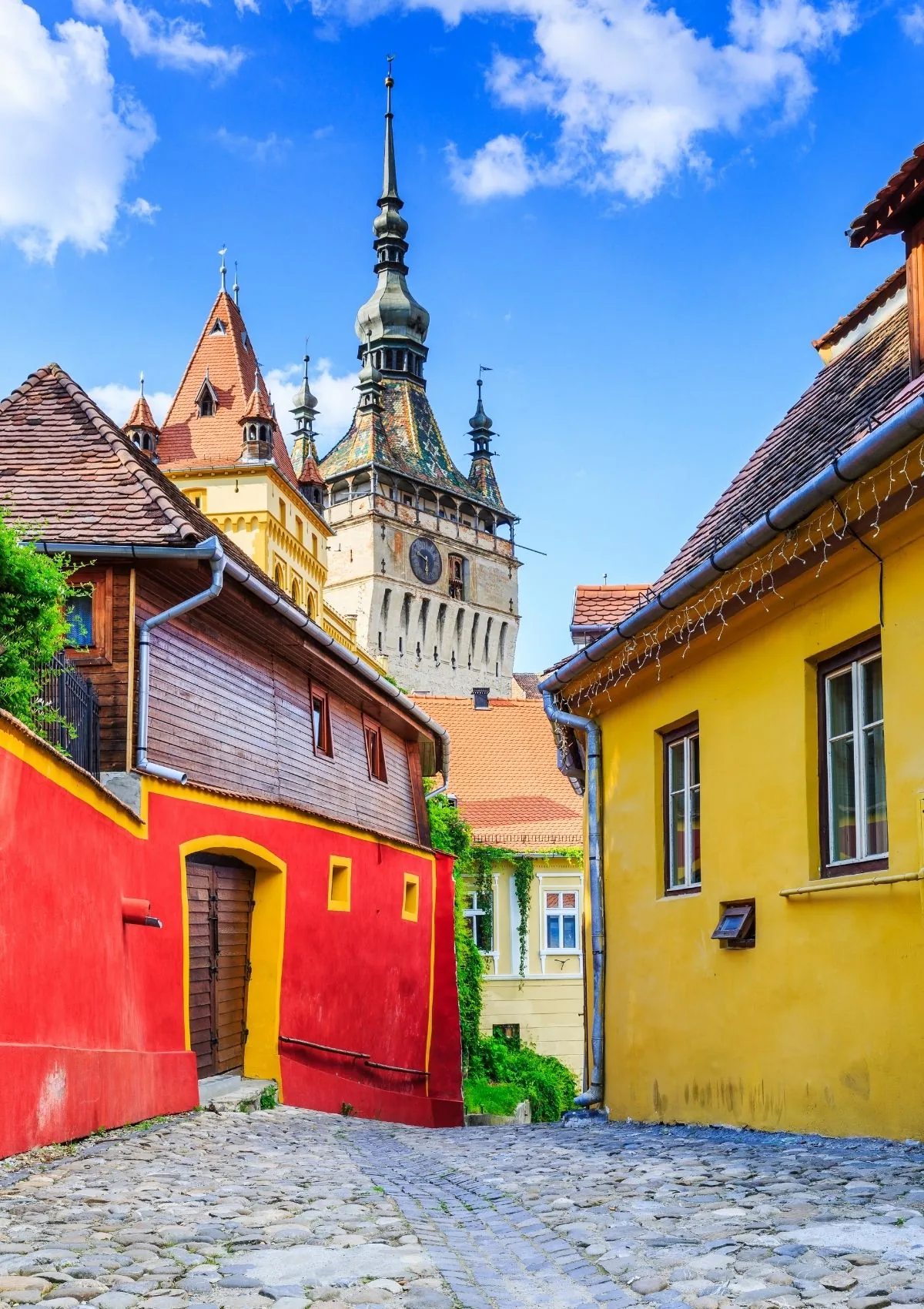

Colored houses and a clock tower in a Transylvanian old town
Romania flag

Romania Business Culture, Work Culture & Etiquette

Business practice guide · informed by benchmark data and by decades of practitioner work at Global Business Culture

The elevator pitch

Where business runs on relationships, warmth once trust builds, communication is direct but diplomatically framed, and Cluj and Bucharest run a globally competitive tech scene. Latin at heart, Slavic in geography, Central European in institutions.

Where in the world
Romania--:--
You--:--
—
Population
~19 million
Main hubs
Bucharest
Cluj-Napoca · Timișoara · Iași · Brașov
Language
Romanian
Currency
RON · lei
Timezone
EET
EEST (EET+1) in summer

Watch outFree

The five mistakes we see most often with Romanian colleagues.

Even seasoned operators trip over these.

1
Confusing Romania with Russia or other Slavic countries. Romanian is a Romance language (Latin roots), not Slavic. Romanian identity is proudly distinct from Slavic neighbors: culturally closer to Italy and France in some respects. Assumptions of interchangeability cause offense.
2
Being over-enthusiastic or salesy. American-style hype or aggressive selling feels unrefined. Romanian business rewards measured, evidence-based conversation. Let substance carry the pitch.
3
Skipping the relationship-building phase. Romanian business runs on personal trust that builds through shared meals and time. Trying to close after one meeting rarely works. Invest in the relationship first.
4
Underestimating the bureaucracy. Anything involving permits, contracts, or public bodies takes longer than expected. Build in real time buffers and don't confuse slow process with obstruction.
5
Ignoring the Orthodox calendar. Orthodox Christian observances (Easter dates differ from Western Easter in some years, plus Assumption, Christmas) shape business rhythms. Check the calendar before scheduling anything critical.

Try one nowFree

Practice working with Romania.

Ten situations you will actually meet, each with three plausible answers. Start with this one.

Scenario 1 of 10 · Relationship & Trust

Your org chart puts Romania in a cluster with several Slavic-speaking markets, run from a hub that covers them all, and your materials are localized by the same vendor. At a Bucharest dinner a counterpart asks, pleasantly, who decided that grouping.

What is the question behind the question?

Module and guide

Learn Romanian business culture.

The same nine topics, twice over: taught in the module, carried in the guide. Both are included in a subscription.

🔒 Subscription
🎓

eLearning module

About 30 minutes · nine topics · video and worked examples

A guided walk through how business is actually done in Romania, with questions along the way so it lands. Nothing is scored and no result is reported: the questions are there to make it stick, not to test you.

Stop whenever you like. Your progress is saved, it resumes where you left off, and it stays on your dashboard until you finish it.

What it covers

  • Economy
  • Society
  • Key country values
  • Management style
  • Team
  • Communication style
  • Meetings
  • Business etiquette
  • Five key recommendations
Unlock with subscription →
🔒 Subscription
📄

Quick guide, four pages

A4 · built to print · no wifi needed

The same ground in a form you can carry. The facts you need before you land, the four values that explain most of the behavior, then the practical detail on how work gets done.

Print it and take it into the room, or read it on the plane the day before a trip to Romania.

On the four pages

  • Country facts
  • Economy and society
  • Four core values
  • Management style
  • Team
  • Communication
  • Meetings
  • Etiquette
  • Top five recommendations
Unlock with subscription →

Your first 30 daysFree

Checklist for working with Romanian colleagues, tick as you go.

Small moves that show you've done the work.

When activity slowsFree

Romanian business calendar, key dates to know.

When Romanian business slows and decision-makers are away.

Late December to early January
Crăciun (Christmas period)
Most businesses slow from Dec 20. Many take extended leave through 2 Jan. Response times drop.
April/May (moveable, often different from Western Easter)
Paște (Orthodox Easter)
Major public holiday. Extended slowdown. Note: Orthodox Easter dates can differ from Catholic/Protestant Easter. Check the year.
1 May / 1 June
Labor Day / Children's Day
National public holidays. Often bridged with weekends.
15 August
Adormirea Maicii Domnului (Assumption)
Orthodox religious observance, public holiday. Combined with summer holidays, response times drop through mid-August.
July to August
Summer holidays
Senior decision-makers often away for 2-3 weeks. Bucharest especially quiet.
1 December
National Day
Romanian National Day marking Great Union (1918). Public holiday with celebrations.

Against your country, or your own experienceFree

How Romania compares.

Where Romania sits on the five dimensions. Add your own country or your assessment scores, and click any row for detail.

Relationship & Trust Click to expand
Trust built through relationshipTrust built through delivery
Romania

What this means in practice

Romanian business trust is built through personal relationship and shared time. Competence and reliability count, but the relational layer is what carries the working relationship: meals, coffee, time spent together.

What to watch for

  • Early formality (titles, surnames) is warmth in the Romanian register, not distance.
  • Business meals matter, especially outside multinationals; declining limits trust-building.
  • Reliability and follow-through carry deeply in Romania’s tight professional networks.
Communication & Feedback Click to expand
Meaning carried in the situationMeaning stated in words
Romania

What this means in practice

Romanian business communication is direct on content but diplomatically framed. Latin warmth meets Central European reserve: measured tone, clear facts.

What to watch for

  • Blunt Anglo-directness can feel unrefined. Add diplomatic framing.
  • Silence in a meeting may signal thoughtful disagreement. Probe for the real view.
  • Difficult messages often arrive privately or one-on-one, not in group settings.
Decisions & Agreement Click to expand
Guided by role, agreed in advanceGuided by contribution, agreed in the meeting
Romania

What this means in practice

Romanian decisions are typically aligned in advance through quiet consultation, then confirmed by the senior person. Meetings often confirm what has been shaped elsewhere.

What to watch for

  • Pushing for a decision in the room without prior groundwork rarely works. Brief informally first.
  • Data and reasoning matter: intuitive decisions are treated with suspicion.
  • The senior in the room typically decides, but only after listening carefully.
Accountability & Ownership Click to expand
Belongs to the team and its leaderBelongs to the named person
Romania

What this means in practice

The manager takes new work and gives each part to a named person, who decides smaller matters within limits the manager sets. Work shown to senior management carries the manager's name, with the main contributors mentioned, and the team leader explains a problem to a client.

What to watch for

  • If you want the named owner to answer for their own part, agree that arrangement early in the project.
  • Keep individual feedback out of group settings; a missed target is discussed privately with the person concerned.
  • Check with the manager when a decision reaches beyond the smaller matters the owner was given to settle.
Planning & Adaptability Click to expand
Prepare fully, then startStart early, refine as you learn
Romania

What this means in practice

A short meeting settles the approach and people begin; the work does not usually wait for a written plan to be approved. Questions still open at the start are answered as the work runs, and the team keeps moving and decides as it goes when something unexpected appears.

What to watch for

  • Agree review points rather than a full plan up front; both sides then get structure and room to adjust.
  • Expect an unclear brief to be checked with the manager, then work to start once the intended result is clear.
  • Banking, pharmaceutical and public sector work is planned and documented far more formally than software and services.

Quick answersFree

Common questions about working with Romania.

How should I approach first business meetings in Romania?

Firm handshake, direct eye contact. Use titles (Domnul/Doamna + surname, plus Dr./Prof./Ing.) until first names are offered. Small talk covers travel, food, football, family: extended personal warm-up is normal.

What is the business communication style in Romania?

Direct on content, diplomatically framed. Latin warmth meets Central European reserve. Face-to-face is always better for anything sensitive.

How important is punctuality in business meetings in Romania?

Punctuality expected in international sectors: Bucharest financial services and Cluj tech run tight. Traditional firms and public sector more flexible. Being 5-10 minutes late is often accepted.

How are business decisions made in Romania?

Decisions are typically aligned in advance through quiet consultation, then confirmed by the senior person. Bring a clear recommendation.

How is feedback given in workplaces in Romania?

Feedback is fact-based and specific, delivered with restraint. Praise is measured. Difficult messages typically arrive in person or one-on-one, not by email.

What are the business gift-giving and hospitality norms in Romania?

Corporate gifts are modest, often restricted by compliance. Business meals are relationship venues: Romanian food and wine (particularly from Cotnari or Murfatlar) are welcome. Extended evening socializing varies by sector and city.