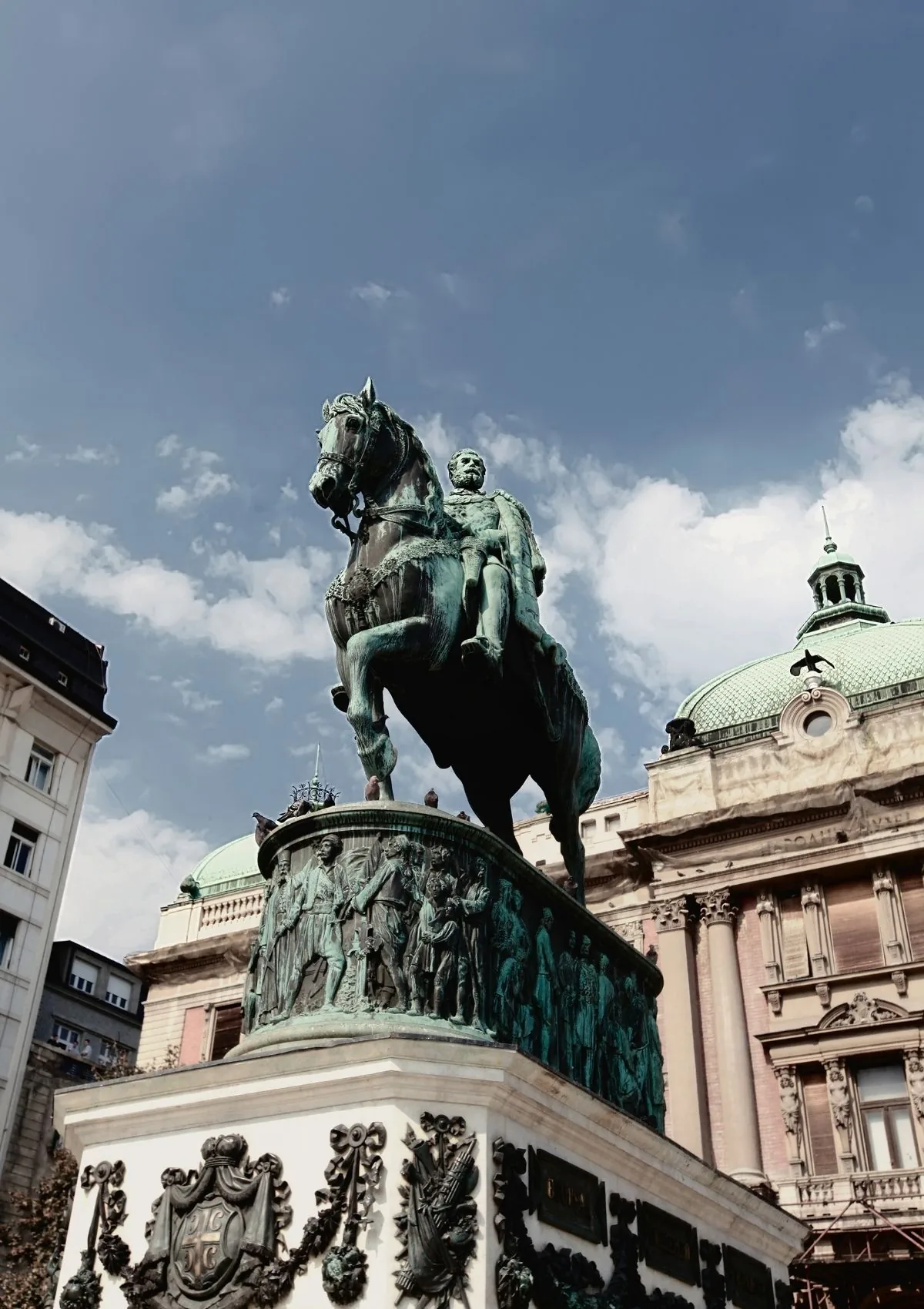
The Prince Mihailo statue on Republic Square in Belgrade, with the National Museum behind it
Serbia flag

Serbia Business Culture, Work Culture & Etiquette

Business practice guide · informed by benchmark data and by decades of practitioner work at Global Business Culture

The elevator pitch

Where trust attaches to people rather than to contracts, and where hedged phrasing is taken at face value rather than heard as a polite no. Directness delivered with warmth: an unusual pairing, and the whole of the country in one line.

Where in the world
Serbia--:--
You--:--
—
Population
~6.6 million
Main hubs
Belgrade
Novi Sad · Niš · Kragujevac
Language
Serbian
Cyrillic and Latin script in full daily parallel · English common in tech
Currency
RSD · дин
Timezone
CET · UTC+1
CEST (UTC+2) in summer · 1h ahead of UK

Watch outFree

The five mistakes we see most often with Serbian colleagues.

Even seasoned operators trip over these.

1
Hedging, and expecting it to be understood. “We might want to consider” is heard as genuine uncertainty, not as a polite refusal. If you mean no, say no. Softening removes the message rather than the sting.
2
Reading a blunt email as coolness. “No. Too early. Call me.” is a complete and helpful answer. Written communication is short and functional; the reasoning lives in the call.
3
Treating loud debate as conflict. A design review can get animated, and the same people go to lunch afterwards. Imposing turn-taking makes a team less willing to raise real objections.
4
Introducing process without a reason. A report circulated as a blank template gets completed thinly. Say what it feeds into and be seen using it. Purpose earns engagement; instruction alone does not.
5
Assuming the room can commit. The decision sits at the top, so a meeting without the decision-maker produces recommendations. Confirm who attends, and at what level, before you travel.

Try one nowFree

Practice working with Serbia.

Ten situations you will actually meet, each with three plausible answers. Start with this one.

Scenario 1 of 10 · Relationship & Trust

Two good years with the same Belgrade supplier, and almost all of it through one account manager who has now told you he is moving to a competitor at the end of the quarter. The contract is with the company, the terms are good, and you assume the arrangement continues unchanged.

What should you expect?

Module and guide

Learn Serbian business culture.

The same nine topics, twice over: taught in the module, carried in the guide. Both are included in a subscription.

🔒 Subscription
🎓

eLearning module

About 30 minutes · nine topics · video and worked examples

A guided walk through how business is actually done in Serbia, with questions along the way so it lands. Nothing is scored and no result is reported: the questions are there to make it stick, not to test you.

Stop whenever you like. Your progress is saved, it resumes where you left off, and it stays on your dashboard until you finish it.

What it covers

  • Economy
  • Society
  • Key country values
  • Management style
  • Team
  • Communication style
  • Meetings
  • Business etiquette
  • Five key recommendations
Unlock with subscription →
🔒 Subscription
📄

Quick guide, four pages

A4 · built to print · no wifi needed

The same ground in a form you can carry. The facts you need before you land, the four values that explain most of the behavior, then the practical detail on how work gets done.

Print it and take it into the room, or read it on the plane the day before a trip to Serbia.

On the four pages

  • Country facts
  • Economy and society
  • Four core values
  • Management style
  • Team
  • Communication
  • Meetings
  • Etiquette
  • Top five recommendations
Unlock with subscription →

Your first 30 daysFree

Checklist for working with Serbian colleagues, tick as you go.

Small moves that show you've done the work.

When activity slowsFree

Serbian business calendar, key dates to know.

When Serbian business slows and decision-makers are away.

1 to 3 January and 7 January
New year and Orthodox Christmas
Three public holidays at new year, then Orthodox Christmas on 7 January. The first week of the year is effectively unavailable.
Varies by family
Slava, the family patron saint day
Most families host relatives on the same date every year and commonly take the day as leave. Not a shared national date: ask, do not assume.
Orthodox Easter, April or May
Easter weekend
Good Friday to Easter Monday, on the Orthodox calendar rather than the Western one, so the dates rarely coincide with your own.
15 and 16 February
Statehood Day
Sretenje, marking the 1804 uprising and the 1835 constitution. Two public holidays, and the country's national day.
1 and 2 May
Labor Day
Two public holidays, frequently bridged. The start of the outdoor season and a popular travel weekend.
July and August
Summer leave
Senior people are away for extended stretches and Belgrade thins out. Confirm attendance before scheduling a decision.

Against your country, or your own experienceFree

How Serbia compares.

Where Serbia sits on the five dimensions. Add your own country or your assessment scores, and click any row for detail.

Relationship & Trust Click to expand
Trust built through relationshipTrust built through delivery
Serbia

What this means in practice

Confidence sits in people rather than in organizations or contracts alone. A supplier relationship is usually with a named individual and often moves with them when they change employer, and veza, the informal network of people who will take your call, does real work.

What to watch for

  • A well-connected local colleague can shorten an administrative process considerably.
  • If your main contact leaves, expect the relationship to leave with them.
  • Expertise and credentials also earn standing here, which is not true everywhere on this end of the scale.
Communication & Feedback Click to expand
Meaning carried in the situationMeaning stated in words
Serbia

What this means in practice

Serbian colleagues are plain-spoken with each other, and a well-argued view stated frankly is respected. With senior colleagues the wording becomes noticeably more careful, so the phrasing is worth listening to, and concerns about someone's work are named clearly in private.

What to watch for

  • Take the plain style as respect for your ability to handle the point, not as sharpness.
  • Confirm a commitment with a date or a next step, as colleagues here do with each other.
  • Silence on a message can mean several things; a phone call is the usual way to find out.
Decisions & Agreement Click to expand
Guided by role, agreed in advanceGuided by contribution, agreed in the meeting
Serbia

What this means in practice

The manager decides, and one who stays vague reads as indecisive rather than consultative. Teams argue a point energetically with the manager present, then implement once the call is made. The pushback is about the plan, not about who is in charge.

What to watch for

  • A meeting without the senior person produces recommendations, not commitments.
  • State your decision clearly and explain why; that gets faster follow-through than asking a team to converge.
  • Direct challenge in the room is normal and is not a loyalty problem.
Accountability & Ownership Click to expand
Belongs to the team and its leaderBelongs to the named person
Serbia

What this means in practice

The manager takes on new work and gives each part to a named person, who decides smaller matters within limits the manager sets. Work shown to senior management or a client carries the manager's name, with the contributors mentioned.

What to watch for

  • Route larger calls through the manager; the named owner decides the smaller ones within agreed limits.
  • If you want the named owner to present and answer for their own part, ask at project start.
  • After a missed deadline the manager carries it for the team and speaks privately with the person.
Planning & Adaptability Click to expand
Prepare fully, then startStart early, refine as you learn
Serbia

What this means in practice

The agenda is a guide rather than a script. Discussion ranges beyond the listed items and doubles back, and process introduced without a stated reason tends to be completed thinly. Purpose gets engagement where instruction alone does not.

What to watch for

  • Let the discussion run, then restate decisions and owners at the end and circulate them the same day.
  • Meetings start a few minutes late and can overrun. Do not book back to back across a Belgrade day.
  • Timekeeping is flexible for hosts and firm for guests: arrive on time yourself.

Quick answersFree

Common questions about working with Serbia.

How should I approach first business meetings in Serbia?

A firm handshake with eye contact for everyone in the room, on arrival and on leaving. Begin with Gospodin or Gospođa and the surname, or a professional title. Expect real conversation over coffee first.

What is the business communication style in Serbia?

Direct and warm at once. Positions are stated plainly, bad news included. Hedged phrasing is taken at face value, so if you mean no, say no. Short emails are efficiency, and irony is a normal register.

How important is punctuality in business meetings in Serbia?

Firm for guests, flexible for hosts. Arrive on time yourself. Meetings often start late and can overrun, so leave space rather than booking back to back. Working days start early, many offices from eight.

How are business decisions made in Serbia?

By the manager, after open debate. A vague manager reads as indecisive. Teams argue energetically and then implement. A meeting without the decision-maker produces recommendations rather than commitments.

How is feedback given in workplaces in Serbia?

Directly, and it is not personal. Colleagues criticise a proposal in strong terms and stay warm towards the person who made it. Blunt remarks between people who know each other signal comfort, not friction.

What are the business gift-giving and hospitality norms in Serbia?

Hosts insist on paying; accept and reciprocate later. Invited to a home, bring flowers in an odd number, since even numbers are for funerals. Meals open with rakija and a toast of Živeli, with eye contact.