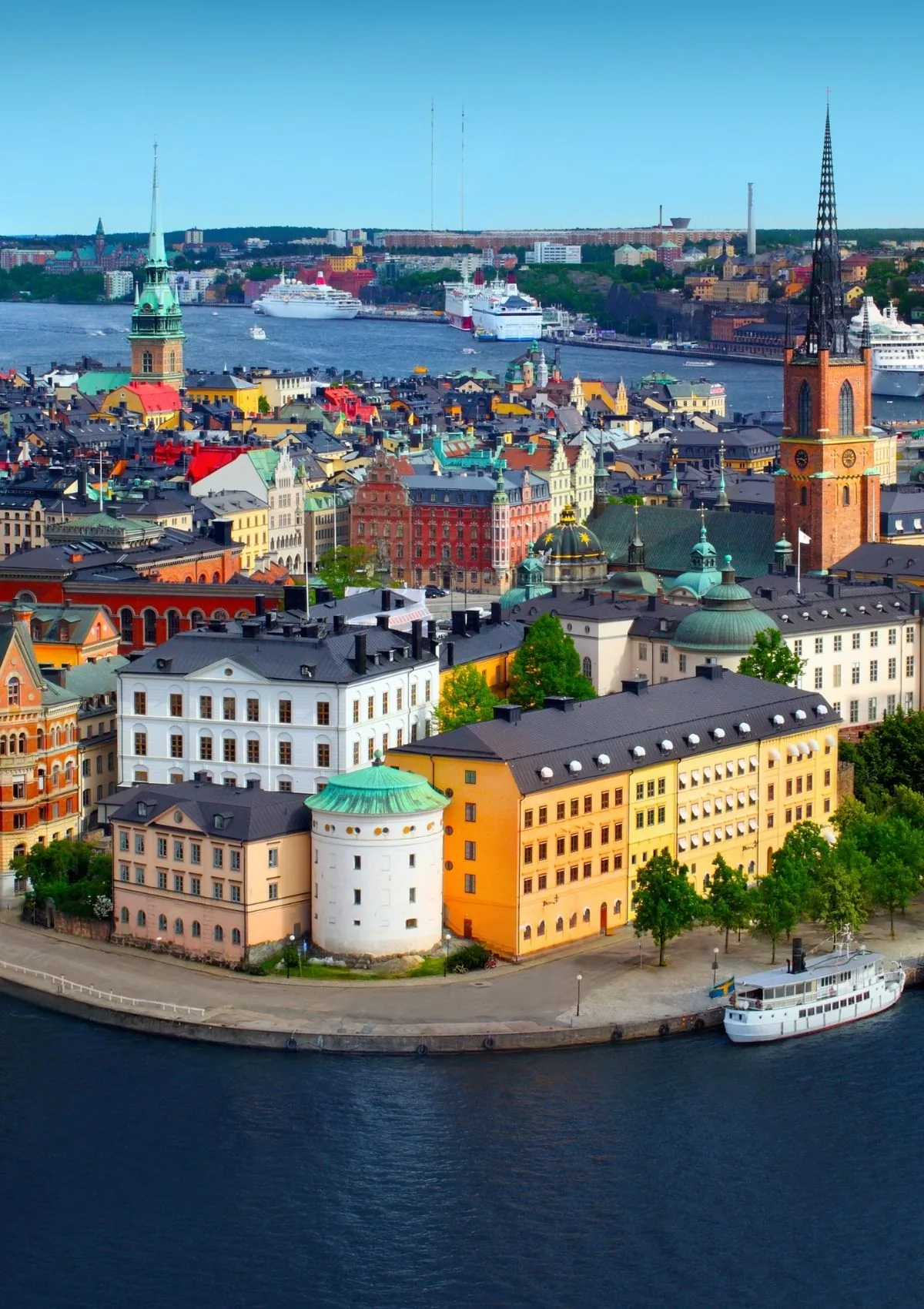
Stockholm's waterfront, with the old town rooftops and spires behind
Sweden flag

Sweden Business Culture, Work Culture & Etiquette

Business practice guide · informed by benchmark data and by decades of practitioner work at Global Business Culture

The elevator pitch

Where business runs on consensus, lagom (just enough), and fika, structures are flat by principle, and personal warmth grows through quiet reliability, not loud debate. Direct but polite, pragmatic but sustainable-minded, and semester (summer) is genuinely off.

Where in the world
Sweden--:--
You--:--
—
Population
~10.6 million
Main hubs
Stockholm
Göteborg · Malmö · Uppsala · Lund
Language
Swedish
English fluent
Currency
SEK · kr
Timezone
CET
CEST (CET+1) in summer

Watch outFree

The five mistakes we see most often with Swedish colleagues.

Even seasoned operators trip over these.

1
Trying to schedule anything in July (semester). Swedish semester (summer holidays) is genuinely serious: many businesses reduce to skeleton staff for all of July. Senior decision-makers are away 3-4 weeks. Plan critical work around it, not through it.
2
Being over-enthusiastic or self-promotional. Lagom pushes back against extremes, including enthusiasm and self-promotion. Talk about the work and the team; let outcomes speak. American-style personal branding lands badly.
3
Rushing consensus. Swedish consensus is deep, not surface: everyone with a stake needs to be genuinely heard. Rushing this phase or announcing decisions without consultation damages trust significantly.
4
Skipping fika. Fika (coffee break) is real business, a genuine relationship-building venue where informal alignment happens. Declining every invitation limits how much trust can build. Sit down, have a coffee.
5
Scheduling business calls in the evening. Work-life boundaries are strongly respected. A call at 7pm is unusual and often unwelcome: evenings and weekends belong to family. Keep meetings within business hours.

Try one nowFree

Practice working with Sweden.

Ten situations you will actually meet, each with three plausible answers. Start with this one.

Scenario 1 of 10 · Relationship & Trust

Your Stockholm counterparts break mid-morning and invite you to fika. You have a deadline, so you say thanks and keep working at your laptop. You do this three days running. The work goes fine, but you notice you are increasingly out of step with what the team has already settled among themselves.

What are you missing?

Module and guide

Learn Swedish business culture.

The same nine topics, twice over: taught in the module, carried in the guide. Both are included in a subscription.

🔒 Subscription
🎓

eLearning module

About 30 minutes · nine topics · video and worked examples

A guided walk through how business is actually done in Sweden, with questions along the way so it lands. Nothing is scored and no result is reported: the questions are there to make it stick, not to test you.

Stop whenever you like. Your progress is saved, it resumes where you left off, and it stays on your dashboard until you finish it.

What it covers

  • Economy
  • Society
  • Key country values
  • Management style
  • Team
  • Communication style
  • Meetings
  • Business etiquette
  • Five key recommendations
Unlock with subscription →
🔒 Subscription
📄

Quick guide, four pages

A4 · built to print · no wifi needed

The same ground in a form you can carry. The facts you need before you land, the four values that explain most of the behavior, then the practical detail on how work gets done.

Print it and take it into the room, or read it on the plane the day before a trip to Sweden.

On the four pages

  • Country facts
  • Economy and society
  • Four core values
  • Management style
  • Team
  • Communication
  • Meetings
  • Etiquette
  • Top five recommendations
Unlock with subscription →

Your first 30 daysFree

Checklist for working with Swedish colleagues, tick as you go.

Small moves that show you've done the work.

When activity slowsFree

Swedish business calendar, key dates to know.

When Swedish business slows and decision-makers are away.

Late December to early January
Jul (Christmas period)
Most businesses slow from Dec 20. Many take extended leave through 2 Jan. Response times drop.
Maundy Thursday to Easter Monday
Påsk (Easter)
Extended break; many take the full surrounding week. Response times drop.
30 April / 1 May
Valborg / Labor Day
Valborg (spring celebration) evening + Labor Day. Often bridged with the weekend for an extended break.
Friday closest to 24 June
Midsummer
Culturally the biggest holiday. Businesses close, cities empty, people head to summer cabins. Deal flow stops for a week either side.
July
Semester (Summer holidays)
Serious: Swedes take July very seriously. Many businesses reduce to skeleton staff. Senior people away 3-4 weeks. Plan around it.
6 June
National Day
National public holiday. Public celebrations across the country.

Against your country, or your own experienceFree

How Sweden compares.

Where Sweden sits on the five dimensions. Add your own country or your assessment scores, and click any row for detail.

Relationship & Trust Click to expand
Trust built through relationshipTrust built through delivery
Sweden

What this means in practice

Swedish business trust is earned through competence, delivery, and quiet consistency. Sweden is one of the highest-trust societies in the world: reliability is the currency and contracts stay lean.

What to watch for

  • Extended formal relationship-building feels wasteful. Get to the substance.
  • Fika (coffee breaks) is real business, the relationship builds between cups.
  • Work and personal life are strictly separated; evenings and weekends belong to family.
Communication & Feedback Click to expand
Meaning carried in the situationMeaning stated in words
Sweden

What this means in practice

Swedish business communication is direct but polite: clearer than French or Italian, softer than Danish or Dutch. Understatement is common; over-enthusiasm reads as foreign.

What to watch for

  • What sounds blunt to Anglo or Southern European ears is neutral Swedish register.
  • Silence in a meeting isn't consent: Swedes will speak up thoughtfully if they disagree.
  • Lagom (just enough) shapes tone. Avoid extremes, whether enthusiasm or criticism.
Decisions & Agreement Click to expand
Guided by role, agreed in advanceGuided by contribution, agreed in the meeting
Sweden

What this means in practice

Swedish decisions are built in the meeting itself. Everyone with a stake contributes, discussion continues until alignment is genuine, and the decision is that discussion reaching its conclusion rather than a separate step afterwards.

What to watch for

  • Consensus here is deep rather than surface, and it is built live. Expect real discussion before anything is settled.
  • Saying nothing is usually taken as agreement, so if you disagree, say so in the room; there is rarely a second conversation afterwards.
  • Once decided, execution is orderly, and reopening without new information erodes trust.
Accountability & Ownership Click to expand
Belongs to the team and its leaderBelongs to the named person
Sweden

What this means in practice

Accountability is individual and clearly named. Titles matter less than competence and delivery. Roles are respected but crossed pragmatically.

What to watch for

  • Reaching outside your area to "help" without asking can feel like overreach.
  • Junior colleagues own their patch and speak up openly: the flat structure is real.
  • Written confirmation of ownership is standard. Expect emails documenting decisions.
Planning & Adaptability Click to expand
Prepare fully, then startStart early, refine as you learn
Sweden

What this means in practice

Swedish teams go back with questions, answer the main ones, then meet to agree the approach and begin without waiting for a signed document. An unexpected problem pauses the part affected while it is re-planned, and the rest of the work keeps moving.

What to watch for

  • Expect questions on an unclear brief; the main ones get answered before work starts, and others stay open.
  • Allow for the agreement meeting before work starts, and expect the process itself to be adapted as needed.
  • Engineering, life sciences and public sector work carry more documentation than technology and service firms.

Quick answersFree

Common questions about working with Sweden.

How should I approach first business meetings in Sweden?

Firm handshake, direct eye contact, first names from the start, even with senior executives. Small talk is brief and pragmatic; travel, weather, sport, food are safe topics. Get to business quickly.

What is the business communication style in Sweden?

Direct but polite. Lagom (just enough) shapes tone. Avoid extremes. Understatement is common; over-enthusiasm or self-promotion reads as foreign.

How important is punctuality in business meetings in Sweden?

Punctuality is strict. Arrive on time or 2-3 minutes early; being late without notice signals disrespect. Meetings start and end on schedule; fika breaks are respected as work time.

How are business decisions made in Sweden?

Decisions follow a strong consensus model: everyone with a stake gets heard, discussion continues until alignment is genuine. Can feel slow but produces durable outcomes.

How is feedback given in workplaces in Sweden?

Feedback is direct but polite. Praise is measured; over-enthusiastic praise reads as insincere. Criticism is delivered plainly but with care for the relationship.

What are the business gift-giving and hospitality norms in Sweden?

Corporate gifts are minimal: extravagance runs into cultural discomfort. Fika (coffee break) is a genuine institution. Accept invitations. Don't expect extended socializing in the evening; Sweden protects family time fiercely.