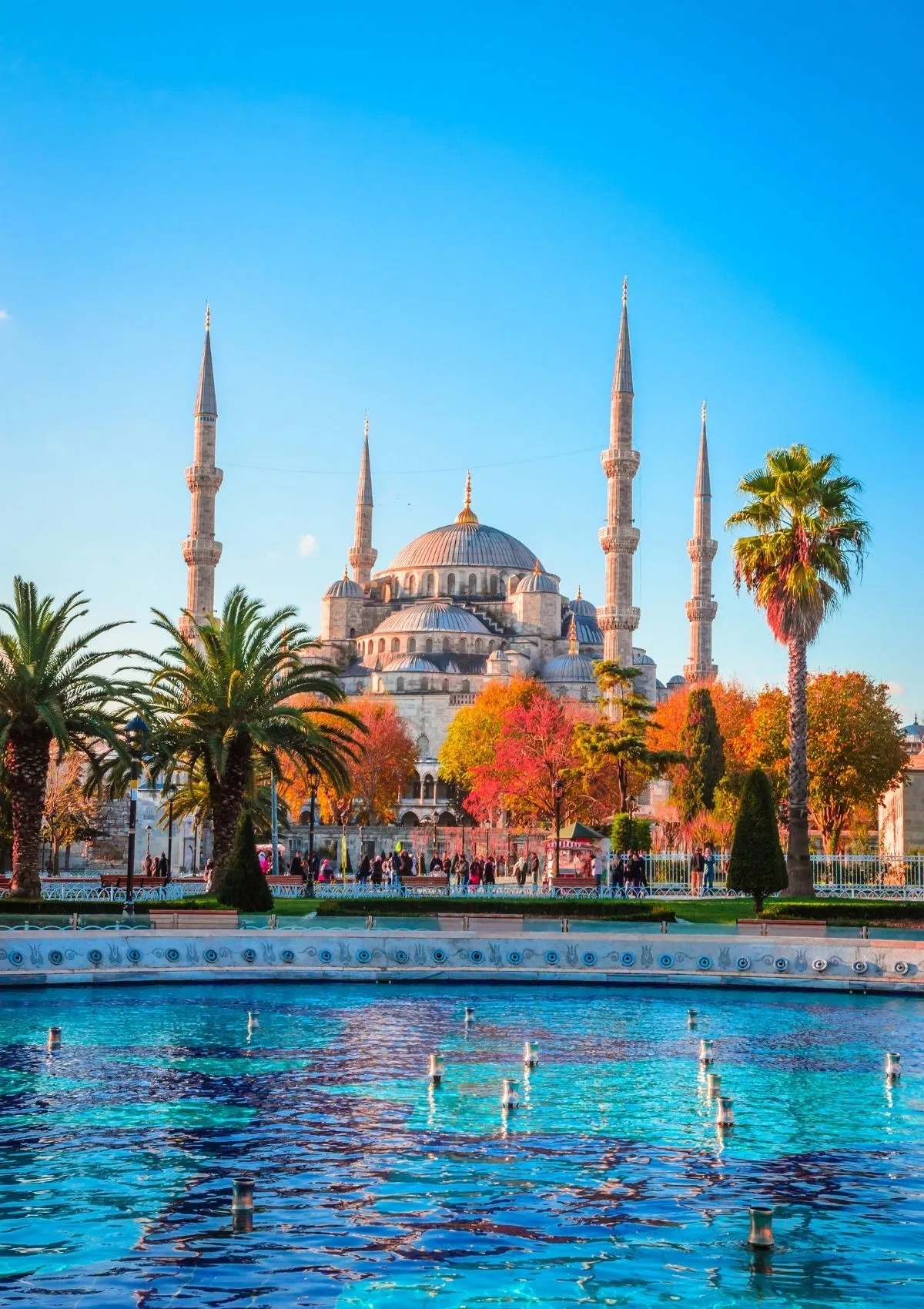
The Blue Mosque in Istanbul seen across the fountain in Sultanahmet Square
Turkey flag

Turkey Business Culture, Work Culture & Etiquette

Business practice guide · informed by benchmark data and by decades of practitioner work at Global Business Culture

The elevator pitch

Where business runs on relationships, hospitality, and endless çay (tea), people say what they think and wrap it in courtesy first, and the yes that moves the work is the senior person's. Warm, entrepreneurial, and quick to act once the relationship is there.

Where in the world
Turkey--:--
You--:--
—
Population
~85 million
Main hubs
Istanbul
Ankara · Izmir · Bursa · Antalya
Language
Turkish
Currency
TRY · ₺
Timezone
TRT (UTC+3)
No daylight saving

Watch outFree

The five mistakes we see most often with Turkish colleagues.

Even seasoned operators trip over these.

1
Confusing Turkey with Arab or Persian neighbors. Turkish culture, language, and identity are distinct from Arab and Iranian neighbors. Turkish is Turkic, not Semitic; Turkey is a secular state; the historical and cultural context differs sharply. Assumptions of interchangeability cause real offense.
2
Trying to skip the relationship-building phase. Turkish business runs on personal trust that builds over tea and meals. Trying to close after one meeting or a video call rarely works. Invest in the relationship, the business follows.
3
Refusing çay (tea) repeatedly. Tea will be offered constantly, at every meeting, in every office. Accepting is baseline hospitality. Repeatedly refusing signals cultural distance or coldness.
4
Ignoring the Ramadan rhythm. Though Turkey is secular, many colleagues observe Ramadan. Work hours may shorten, business lunches shift, energy dips in the afternoon. Plan around it; iftar (evening meal) becomes the main social event.
5
Underestimating Istanbul traffic. Istanbul traffic is legendary, a 10km trip can take 90 minutes at rush hour. Book earlier meetings, allow generous buffers, and don't punish colleagues for being late during traffic hours.

Try one nowFree

Practice working with Turkey.

Ten situations you will actually meet, each with three plausible answers. Start with this one.

Scenario 1 of 10 · Relationship & Trust

Your organization runs Turkey inside a Middle East and North Africa cluster, staffed and resourced from Dubai, with materials localized by a vendor who works across Arabic-language markets. In the opening meeting your counterpart asks, lightly, how that came about.

What is behind the question?

Module and guide

Learn Turkish business culture.

The same nine topics, twice over: taught in the module, carried in the guide. Both are included in a subscription.

🔒 Subscription
🎓

eLearning module

About 30 minutes · nine topics · video and worked examples

A guided walk through how business is actually done in Turkey, with questions along the way so it lands. Nothing is scored and no result is reported: the questions are there to make it stick, not to test you.

Stop whenever you like. Your progress is saved, it resumes where you left off, and it stays on your dashboard until you finish it.

What it covers

  • Economy
  • Society
  • Key country values
  • Management style
  • Team
  • Communication style
  • Meetings
  • Business etiquette
  • Five key recommendations
Unlock with subscription →
🔒 Subscription
📄

Quick guide, four pages

A4 · built to print · no wifi needed

The same ground in a form you can carry. The facts you need before you land, the four values that explain most of the behavior, then the practical detail on how work gets done.

Print it and take it into the room, or read it on the plane the day before a trip to Turkey.

On the four pages

  • Country facts
  • Economy and society
  • Four core values
  • Management style
  • Team
  • Communication
  • Meetings
  • Etiquette
  • Top five recommendations
Unlock with subscription →

Your first 30 daysFree

Checklist for working with Turkish colleagues, tick as you go.

Small moves that show you've done the work.

When activity slowsFree

Turkish business calendar, key dates to know.

When Turkish business slows and decision-makers are away.

One month, shifts annually (~11 days earlier each year)
Ramazan (Ramadan)
Though secular, many colleagues observe fasting. Work days shorten, energy dips afternoons, iftar (sunset meal) becomes main social event. Plan around it.
Immediately after Ramadan (moveable)
Ramazan Bayramı (Eid al-Fitr)
Public holiday, typically 3-4 days. Businesses close; families gather. Traffic in and out of Istanbul is extreme.
Roughly 2 months after Ramazan Bayramı
Kurban Bayramı (Eid al-Adha)
Public holiday, typically 4-5 days. Businesses close. Major national travel. Book flights and hotels well ahead.
23 April
National Sovereignty & Children's Day
National public holiday. Businesses closed. Often bridged with the weekend.
30 August / 29 October
Victory Day / Republic Day
Two national public holidays. Republic Day (29 Oct) is the biggest: marks founding of modern Turkey (1923).
July to August
Summer holidays
Senior decision-makers often away for 2-3 weeks. Istanbul empties as people head to coastal resorts.

Against your country, or your own experienceFree

How Turkey compares.

Where Turkey sits on the five dimensions. Add your own country or your assessment scores, and click any row for detail.

Relationship & Trust Click to expand
Trust built through relationshipTrust built through delivery
Turkey

What this means in practice

Turkish business trust is built through personal relationship, shared meals, and hospitality. Delivery matters, but the relational layer runs deep, often built over çay (tea), which will be offered constantly.

What to watch for

  • A single meeting rarely closes anything. Expect multiple rounds and social occasions.
  • Warm introductions from trusted contacts open doors that cold outreach struggles with.
  • Accepting çay (tea) is baseline hospitality: refusing is a subtle relationship signal.
Communication & Feedback Click to expand
Meaning carried in the situationMeaning stated in words
Turkey

What this means in practice

Turkish business communication is direct but diplomatically framed. Passionate discussion is normal engagement; face matters, but pushback within the relationship is expected.

What to watch for

  • Passionate debate is engagement, not conflict. Match the energy.
  • Direct public criticism of seniors is unusual. Raise concerns privately.
  • Diplomatic phrasing softens the message; probe for the underlying position.
Decisions & Agreement Click to expand
Guided by role, agreed in advanceGuided by contribution, agreed in the meeting
Turkey

What this means in practice

Turkish decisions typically rest with the senior person after consultation. Meetings often confirm what has been shaped through personal conversation.

What to watch for

  • Pushing for a decision in the room without prior groundwork rarely works. Brief informally first.
  • The senior in the room typically decides, but only after listening to trusted advisors.
  • Foreign timelines pressed too hard damage trust: patience matters.
Accountability & Ownership Click to expand
Belongs to the team and its leaderBelongs to the named person
Turkey

What this means in practice

Accountability is individual and tied to the reporting line. Titles matter (Bey for Mr, Hanım for Mrs: placed after the first name). Family businesses dominant in traditional sectors; tech firms flatter.

What to watch for

  • Use titles carefully: first name + Bey/Hanım (e.g. "Ahmet Bey") is standard business address.
  • Public individual blame damages face. Correct privately.
  • Escalation follows the org chart: skipping levels causes friction.
Planning & Adaptability Click to expand
Prepare fully, then startStart early, refine as you learn
Turkey

What this means in practice

Turkish business is highly adaptable and improvisational. Plans exist but flex readily; finding a creative way through obstacles ("Türk usulü": Turkish style) is a valued professional skill.

What to watch for

  • Rigid adherence to plan can feel inflexible. Leave room for adjustment.
  • Istanbul traffic genuinely shifts schedules. Build in buffers.
  • Personal contacts often unlock what formal processes stall. Invest in the network.

Quick answersFree

Common questions about working with Turkey.

How should I approach first business meetings in Turkey?

Firm handshake, direct eye contact (wait for women to extend hand first). Address using first name + Bey (Mr) or Hanım (Mrs): e.g. "Ahmet Bey", "Ayşe Hanım". Small talk covers family, travel, football (a national passion), food.

What is the business communication style in Turkey?

Direct but diplomatically framed. Passionate discussion is engagement, not conflict. Face matters; concerns are raised privately, publicly humiliating anyone damages the relationship deeply.

How important is punctuality in business meetings in Turkey?

Punctuality expected in international sectors: Istanbul multinationals run tight. Istanbul traffic genuinely disrupts schedules. Build in real buffers, especially rush hours. Anatolia and traditional sectors more flexible.

How are business decisions made in Turkey?

Decisions typically rest with the senior person after consultation. Junior views are collected privately; the formal meeting often confirms what has been shaped elsewhere.

How is feedback given in workplaces in Turkey?

Feedback is delivered privately and with care for face. Public criticism is unusual and damaging. Praise the team publicly; recognize individuals privately.

What are the business gift-giving and hospitality norms in Turkey?

Çay (tea) will be offered constantly. Accept it. Business meals are relationship venues; Turkish food is a source of national pride. Modest gifts welcomed. Note that observant Muslim colleagues won't drink alcohol during Ramadan or generally.